
Name and Origins
Origins and Development
According to the oldest document from Zurich, King Louis the German founded a convent in Zurich for his daughter Hildegard in 853. As early as 874, the first church was consecrated at its present location. It was designed as a three-nave basilica with a transept and three apses. In the centuries that followed, the eastern section was rebuilt several times; the two towers were also constructed in stages. The south tower was likely built in the first half of the 12th century, and the north tower around 1220–1230.
Romanesque, Gothic, and Transformation
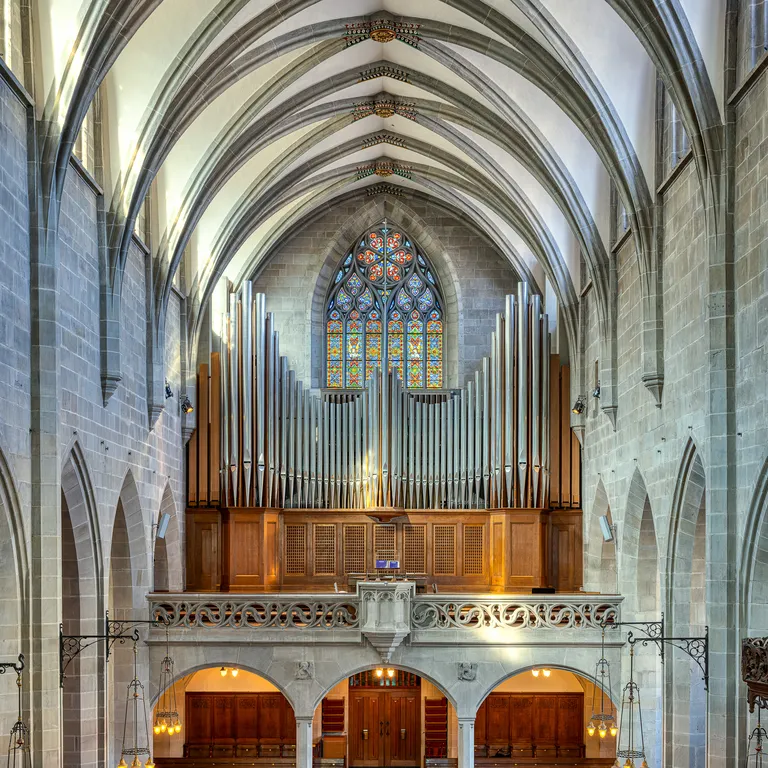
Beginning around 1250, the Fraumünster underwent a major renovation. The choir and transept were initially built in the Romanesque style and later in the Gothic style. As a result, both styles continue to characterize the building to this day. The nave followed in the 14th and 15th centuries, though construction took place under difficult economic conditions and was subject to prolonged interruptions. In the 18th century, the central nave and towers were remodeled; in the 20th century, the church acquired its current appearance through the restoration work of Gustav Gull. Inside, windows by Heaton, Giacometti, and Chagall, as well as the large organ, were added later.
Reformation
In 1524, the last abbess, Katharina von Zimmern, handed over the abbey and church to the Zurich City Council. This marked the end of the monastery’s history; the Fraumünster became a Reformed city church.